
AI, Architecture and the Home You Actually Want to Live In
Ask an AI tool to design your dream home and you might get something beautiful before you have finished your coffee. Timber ceilings, enormous windows, a kitchen with suspiciously little clutter. It is easy to see the appeal.
It also raises a reasonable question: if AI can generate designs, drawings and models, why work with an architect?
For me, the answer begins with what happens beyond that first image. Your home needs to work on your land, within your budget and through all the ordinary, slightly chaotic moments of your life. An architectural team helps bring those things together. AI gives us new ways to explore the possibilities, and there is plenty to be excited about!
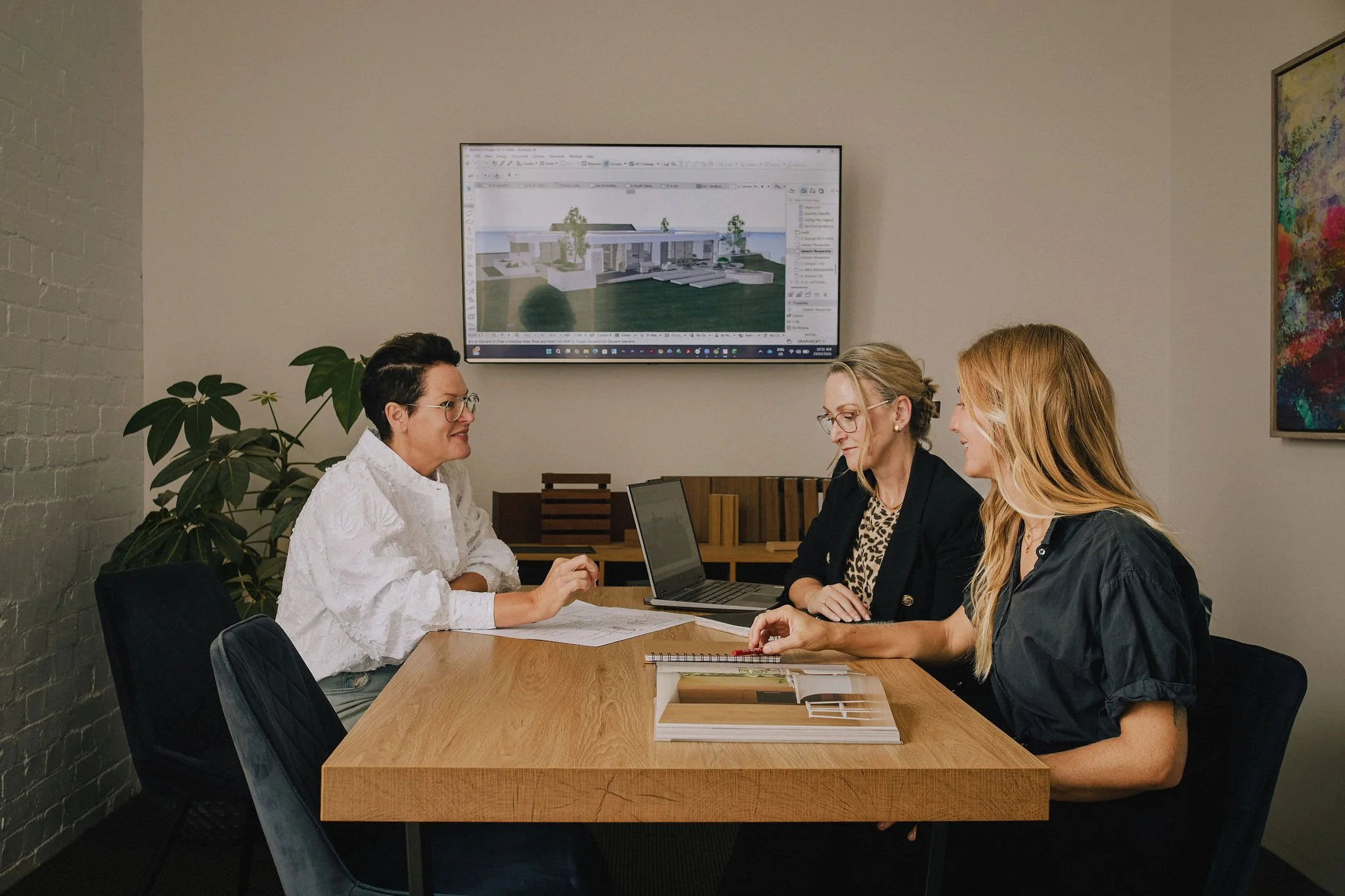
Epic Architecture workshop
The interesting part is understanding you
Imagine showing us an image of a vast open-plan living room. You love the light and the view into the garden. Then we start talking about life at home: someone takes work calls, someone practises an instrument, and someone would quite like five minutes of peace.
Suddenly, there is a much more interesting design conversation to have.
Perhaps you want spaces that feel connected but can close off. Perhaps a courtyard could bring light into several smaller rooms. The image helps us understand what appeals to you; the conversation helps us work out what will serve you well.
That is an important part of architectural thinking: asking questions, recognising competing needs and finding opportunities within them. Sometimes the most useful thing an architect can ask is, “What do you love about this?” The answer gives us somewhere meaningful to go.
How a home feels deserves a place in the design
Think of somewhere you have felt immediately at ease. The light, the quiet, the proportions of the room. A window seat that somehow becomes everyone’s favourite spot.
There is an architectural term for this attention to lived experience: phenomenology. It considers how we experience places through our bodies and senses. Architectural thinkers such as Juhani Pallasmaa have written about why our experience of buildings reaches well beyond what we see. [1]
You do not need to remember the word. You will remember whether your favourite chair catches the winter sun.
For your architect, these qualities become design questions. How does daylight enter the room? Where can sound travel? What do materials feel like? Can you find a quiet corner while still feeling part of family life?
AI imagery can help explore an atmosphere. Whether the finished space delivers it depends on the decisions behind the image, and how those decisions carry through construction.
Then there is the actual block of land
A beautiful image leaves plenty to investigate: orientation, slope, weather exposure, access and relevant planning or hazard requirements. The Australian Institute of Architects has highlighted these site-specific considerations in its discussion of AI-generated design. [2]
Imagine a New England block with wonderful western views. We would want to explore how to enjoy those views while managing afternoon sun and bringing useful winter light into the home. The answer might involve adjusting the layout, framing selected views or creating a sheltered outdoor area.
Each choice connects to others. Moving the house could change earthworks. Changing the roof could affect structure and cost. Your architect works through these relationships with the relevant consultants and building team, helping you understand the trade-offs before committing to them.
The land gets a say. It can be quite opinionated.
What should AI do for your project?
Used thoughtfully, AI can help a team organise briefing information, explore visual directions and assist with repetitive documentation tasks. Specialist tools can support analysis, too. The opportunities depend on the software and the project; an image generator and a performance-modelling tool do very different jobs. [3]
The benefit to you should be clear: options that are easier to understand, better-organised information or time freed for design and coordination. Ask your team where AI helps and how that affects your service, scope or fee. Faster production still requires careful review.
You should also expect clarity about what is exploratory, who checks technical outputs and how your information is protected. Professional guidance calls for transparency and qualified review of AI-assisted work. [3]
As the project develops, your team also helps resolve the knock-on effects of decisions. Depending on your appointment, that support can extend through consultant coordination, approvals, procurement and construction. Agreeing the scope early makes clear who will help with what. [4]
Bring your ideas. They do not need to be finished.
AI can be useful preparation for meeting an architect. Try asking:
“Help me prepare a brief for my architect. Ask about our daily routines, comfort, privacy, outdoor living and future needs. Help me separate essentials from things that would simply be lovely to have.”
Bring a few generated images if you like, and tell us what draws you to each. “I love the filtered light” tells us something useful. So does “I like the kitchen, but I would never want to clean all that glass.”
Use AI to collect questions as well as ideas, and bring its suggestions into the conversation so the team can check their assumptions. Before uploading drawings or private project information, agree with your architect what is appropriate to share. [3]
At Epic, we want to understand the life you are making room for. An architectural team’s continuing value lies in connecting that understanding with design judgement, technical knowledge and support as the project becomes real.
Bring the dream-home image. Bring the list of things that drive you mad about your current house. Both are excellent places to start.
References
[1] Pallasmaa, J. The Eyes of the Skin: Architecture and the Senses, fourth edition. Publisher page. See also Pallasmaa’s contribution to Questions of Perception: Phenomenology of Architecture: Aalto University record.
[2] Australian Institute of Architects (2023). Supporting Responsible AI: Discussion Paper submission. Historical professional position, not current legal advice. Submission.
[3] American Institute of Architects. Guidance for the Responsible Use of AI by Architecture and Design Firms, updated 22 October 2025. Professional guidance, not Australian regulation. Guidance.
[4] Australian Institute of Architects. Working with an Architect. Client guidance.
[5] RIBA (2026). AI adoption reaches tipping point across UK architecture. Survey release.
[6] Shulman, H. C., Dixon, G. N., Bullock, O. M., & Colón Amill, D. (2020). The Effects of Jargon on Processing Fluency, Self-Perceptions, and Scientific Engagement. Journal of Language and Social Psychology, 39(5–6). DOI. Findings checked against the publisher abstract.
[7] Shulman, H. C., & Bullock, O. M. (2020). Don’t dumb it down: The effects of jargon in COVID-19 crisis communication. PLOS ONE, 15(10), e0239524. Article.